

Pillars of Democracy: The United States Capitol and the Enduring Voice of the American Republic (1776–2026)
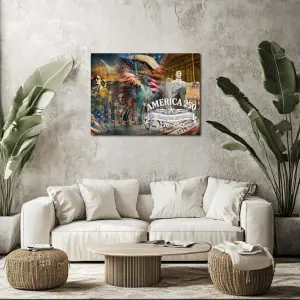
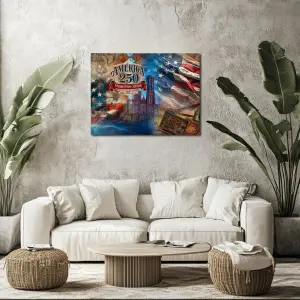
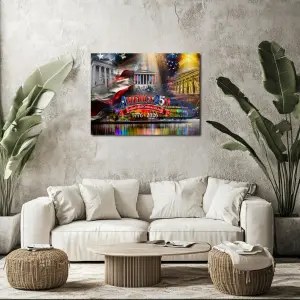
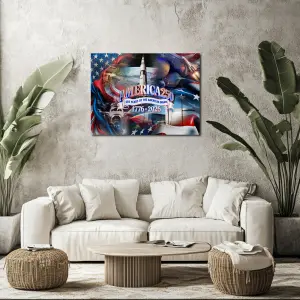
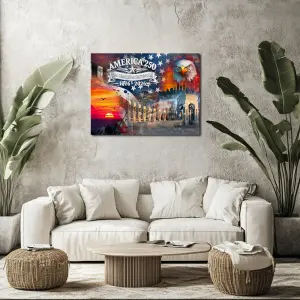
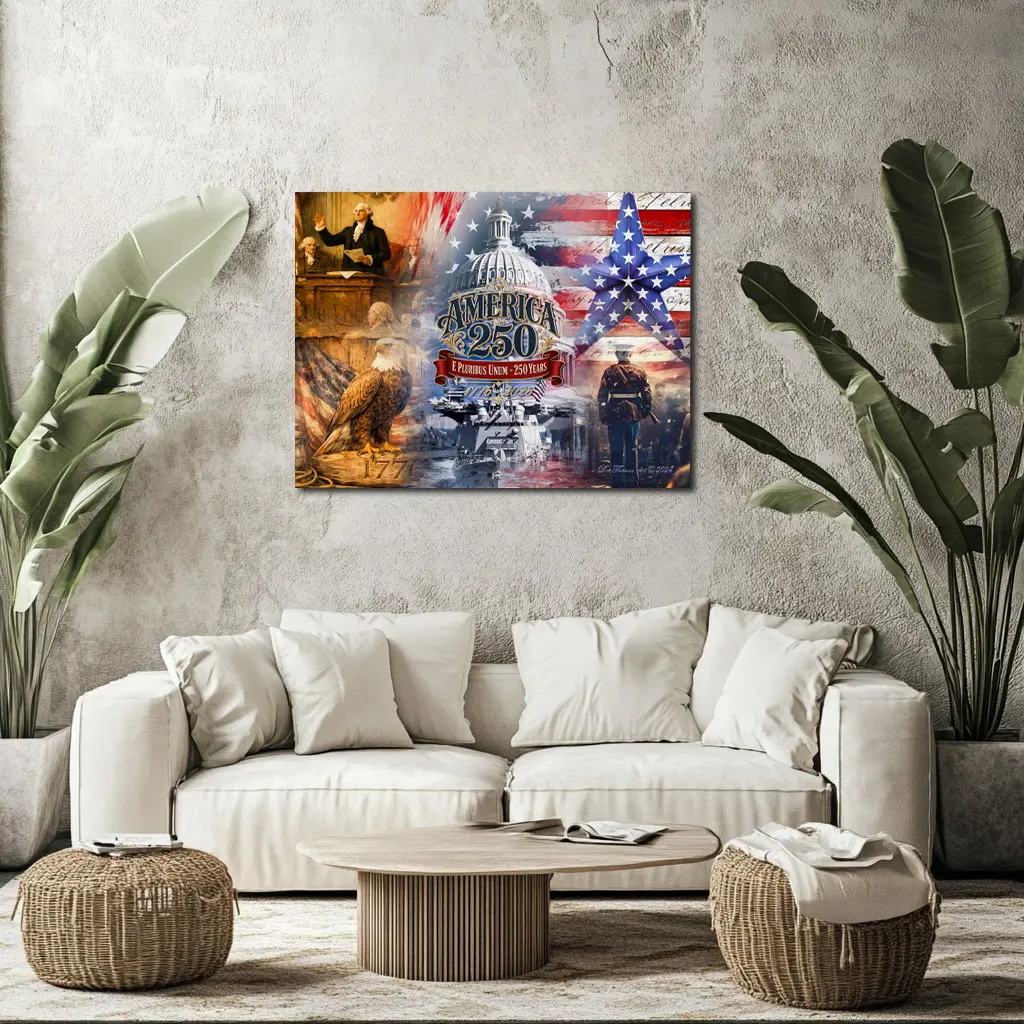
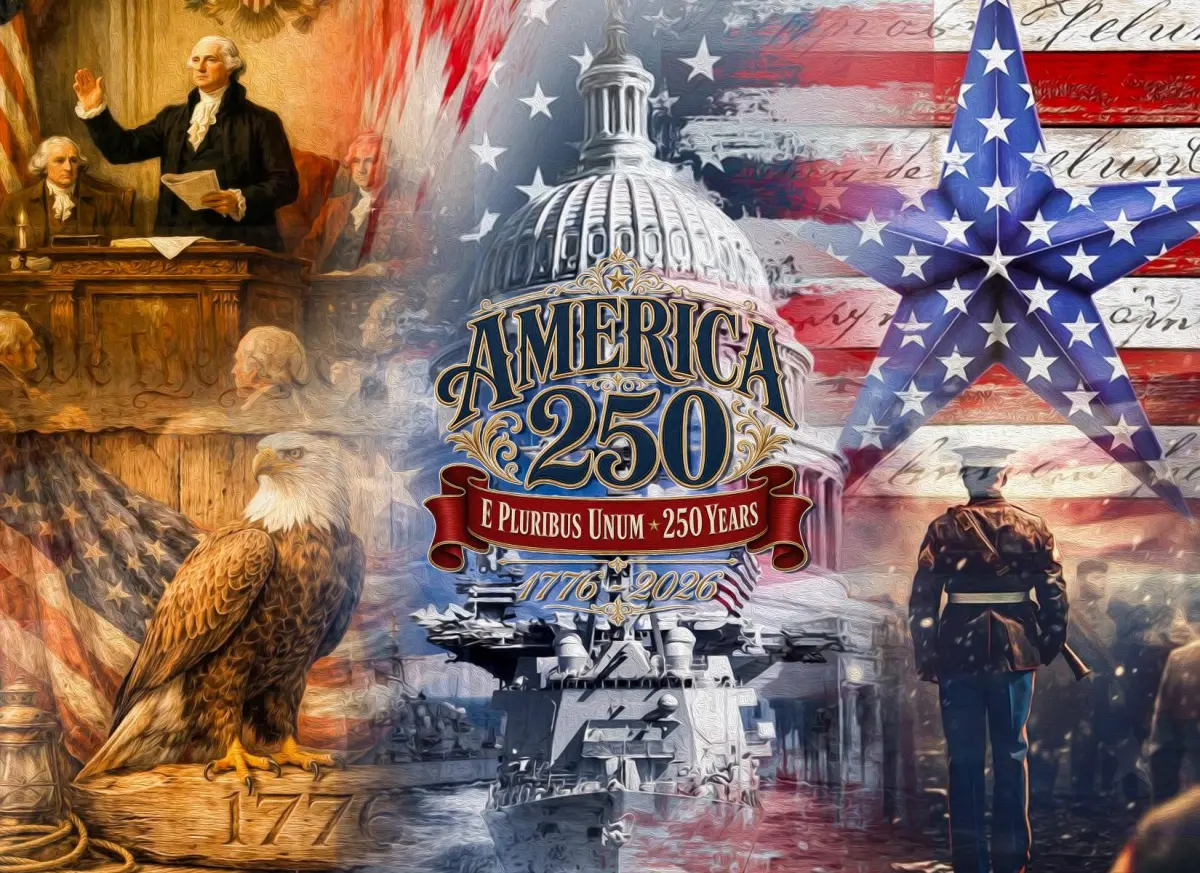
This artwork honors the United States Capitol as the enduring symbol of American democracy during the nation's 250th anniversary (1776–2026) . Through the Capitol, the Constitution , George Washington , the bald eagle , the American flag , a ceremonial soldier, a historic naval vessel, and the national motto "E Pluribus Unum," the composition tells the story of a republic founded on liberty, representative government, and civic responsibility. Each symbol is rooted in its historical significance while contributing to a larger visual narrative of resilience, unity, and constitutional democracy. Rich patriotic colors, luminous light, layered textures, and balanced composition connect the nation's revolutionary beginnings with its continuing evolution. Rather than simply commemorating history, the artwork presents democracy as a living promise—one that has endured for 250 years and continues to depend upon the participation, courage, and shared aspirations of the American people.
Please see Below for Details…


Hotline Order:
Mon - Fri: 07AM - 06PM
019-234-09789
When I envisioned this artwork, I wanted to tell a story that reaches beyond a single building. I wanted to capture the living idea of American democracy—an idea that has been debated, defended, challenged, and strengthened over two and a half centuries. The United States Capitol became the natural heart of this composition because, more than any other building in the nation, it represents the place where the voices of the American people are transformed into the laws that shape the country's future.
Standing proudly at the center, the Capitol rises beneath a patriotic sky, crowned by its magnificent white dome. Its commanding presence is more than architectural beauty; it is a symbol of continuity. Construction of the Capitol began in 1793, under the direction of President George Washington, only a few years after the Constitution established the framework of the new federal government. Although it has been expanded, restored, and rebuilt through wars and national crises—including the burning of Washington during the War of 1812—its purpose has never changed. It remains the meeting place of the United States Congress, where the Senate and the House of Representatives gather to debate, legislate, and represent the will of the American people.
I placed the Capitol at the very center because democracy itself is never static. Like the building, it has continually evolved. Every generation has added its own chapter, expanding rights, confronting injustice, and redefining what liberty means in practice. As America celebrates 250 years since the Declaration of Independence, I wanted the Capitol to remind viewers that freedom survives not only through ideals, but through institutions that protect them.
Surrounding the Capitol are the symbols that gave birth to this enduring republic. Behind the dome, fragments of the United States Constitution quietly emerge across the background. Ratified in 1788, the Constitution remains the oldest written national constitution still in continuous use. Its opening words, "We the People," transformed government from the authority of a monarch into the authority of its citizens. Rather than placing the document in isolation, I allowed its elegant script to flow across the composition like the foundation beneath every other element, because every institution represented here ultimately rests upon those carefully chosen words.
To the left, I included one of the defining moments in American history—George Washington addressing the delegates during the Constitutional Convention. Washington, revered as the nation's first President and often called the "Father of His Country," provided not only military leadership during the Revolutionary War but also moral authority during the nation's fragile beginning. His presence reminds us that America's independence did not end with victory in war. It required wisdom, restraint, and the difficult work of building a government capable of enduring beyond a single generation.
Below him rests the bald eagle, the national bird of the United States since 1782. I chose to portray it calmly rather than dramatically because true strength does not always announce itself with motion. Throughout American history, the eagle has represented courage, vigilance, freedom, and national sovereignty. Its steady gaze reflects the constant responsibility of protecting democratic ideals against complacency and division.
The American flag sweeps across the composition with powerful movement, uniting every historical element into a single visual rhythm. The thirteen original stripes recall the first colonies that declared independence in 1776, while the constellation of fifty stars represents a Union that has expanded across generations. I wanted the flag to feel alive rather than static, reminding viewers that the nation it represents continues to grow, adapt, and strive toward its highest principles.
On the right side of the artwork stands a ceremonial soldier, quietly guarding the nation's memory. Although unnamed, this figure symbolizes every American service member who has stood watch throughout the country's history. From the Revolutionary War to modern peacekeeping missions, generations of men and women have accepted extraordinary sacrifices in defense of constitutional government. Their presence reminds us that democracy is sustained not only through debate inside the Capitol, but also through the dedication of those who protect the freedoms it represents.
Beneath the Capitol, I incorporated a naval vessel emerging from the nation's maritime history. America's strength has never been confined to its land alone. From the establishment of the United States Navy in 1775, the country's maritime forces have protected trade, secured coastlines, and projected stability across the world's oceans. Including the ship acknowledges that national security and democratic prosperity have long been interconnected.
The America 250 emblem occupies the center foreground, supported by the historic motto "E Pluribus Unum," meaning "Out of Many, One." First adopted in 1782 as part of the Great Seal of the United States, the phrase beautifully expresses one of America's defining ideals—that people from different backgrounds, beliefs, and experiences can unite to form a single nation. I wanted these words to feel especially meaningful during the Semiquincentennial celebration, reminding viewers that unity has always been both America's greatest achievement and its greatest responsibility.
Color became the emotional language of this composition. Rich crimson recalls the sacrifices made during the Revolution and every generation that followed. Deep blue reflects stability, justice, and the enduring institutions of constitutional government. Brilliant white represents integrity, hope, and the aspiration toward equality under the law. Warm gold surrounding the Capitol suggests wisdom, continuity, and the accumulated experience of 250 years, while soft sepia tones surrounding the historical figures create a bridge between memory and the present.
Light moves deliberately throughout the artwork. It begins with the warm illumination surrounding the founders before gathering around the Capitol dome and expanding outward across the American flag. I wanted this progression to symbolize the spread of democratic ideals—from a revolutionary vision shared by a few to a constitutional republic that has inspired countless people around the world. Shadows remain present throughout the composition because no democracy is without struggle, yet they never overpower the light. The balance between illumination and darkness reflects the nation's ongoing effort to live up to its founding principles.
The textures throughout the image reinforce the passage of time. The aged parchment of the Constitution contrasts with the polished marble of the Capitol. The detailed feathers of the eagle, the fabric folds of the flag, the weathered uniforms, and the metallic surfaces of the naval vessel each tell their own story. Together they create a tactile journey across centuries, allowing history to feel tangible rather than distant.
Compositionally, every line guides the viewer toward the Capitol before inviting the eye to explore the surrounding narrative. The upward movement of the dome symbolizes aspiration, while the balanced placement of historical figures, patriotic symbols, and national institutions creates harmony between leadership, citizenship, military service, and constitutional governance. Nothing exists in isolation; each element depends upon the others, just as the American experiment depends upon the participation of its people.
Artistically, I blended historical realism with contemporary digital collage to create a composition that feels timeless. Rather than recreating a single historical event, I brought together defining moments, documents, symbols, and institutions into one unified vision. This approach allows viewers to experience 250 years of American history as a continuous conversation between the past, the present, and the future.
The mood is proud, thoughtful, and quietly hopeful. I did not want to create an image that simply celebrates achievement. I wanted one that encourages reflection. Democracy is never finished. Every generation inherits its freedoms, but also its responsibilities. That belief became the emotional foundation of this work.
As the artist, my greatest hope is that viewers see more than familiar landmarks and patriotic symbols. I hope they see the extraordinary journey of a republic founded on ideas that were revolutionary in their time and remain profoundly relevant today. The Capitol is not merely the seat of government—it is a reminder that democracy is built through conversation, compromise, courage, and participation.
Ultimately, "Pillars of Democracy: The United States Capitol and the Enduring Voice of the American Republic (1776–2026)" is my tribute to the institutions, leaders, citizens, and ideals that have carried America through 250 remarkable years. It honors the nation's past without placing it beyond criticism, celebrates its achievements without ignoring its challenges, and looks toward the future with the enduring belief that the American story continues to be written by the people themselves.
Add your review
Your email address will not be published. Required fields are marked *
Please login to write review!
Looks like there are no reviews yet.