

Guardians in the Shadows: The International Spy Museum and the Hidden Intelligence That Safeguarded America (1776–2026)
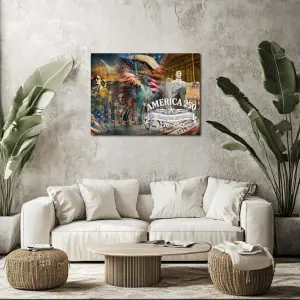
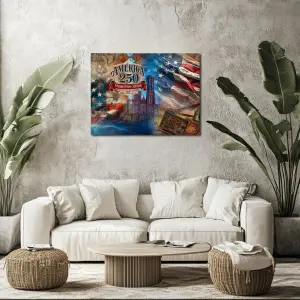
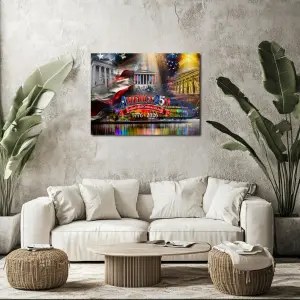
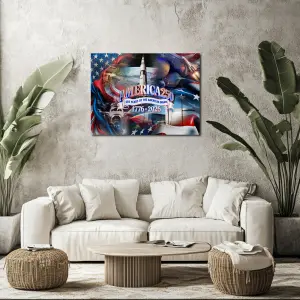
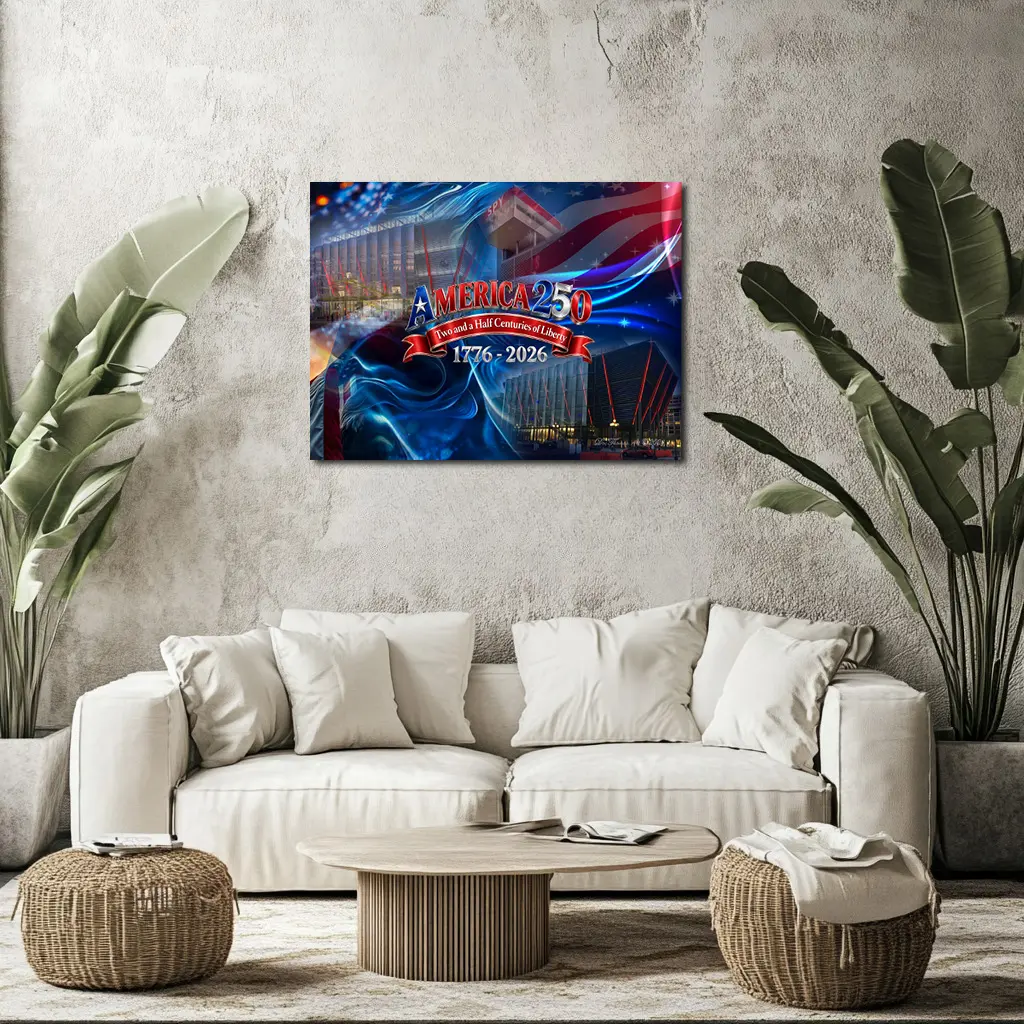
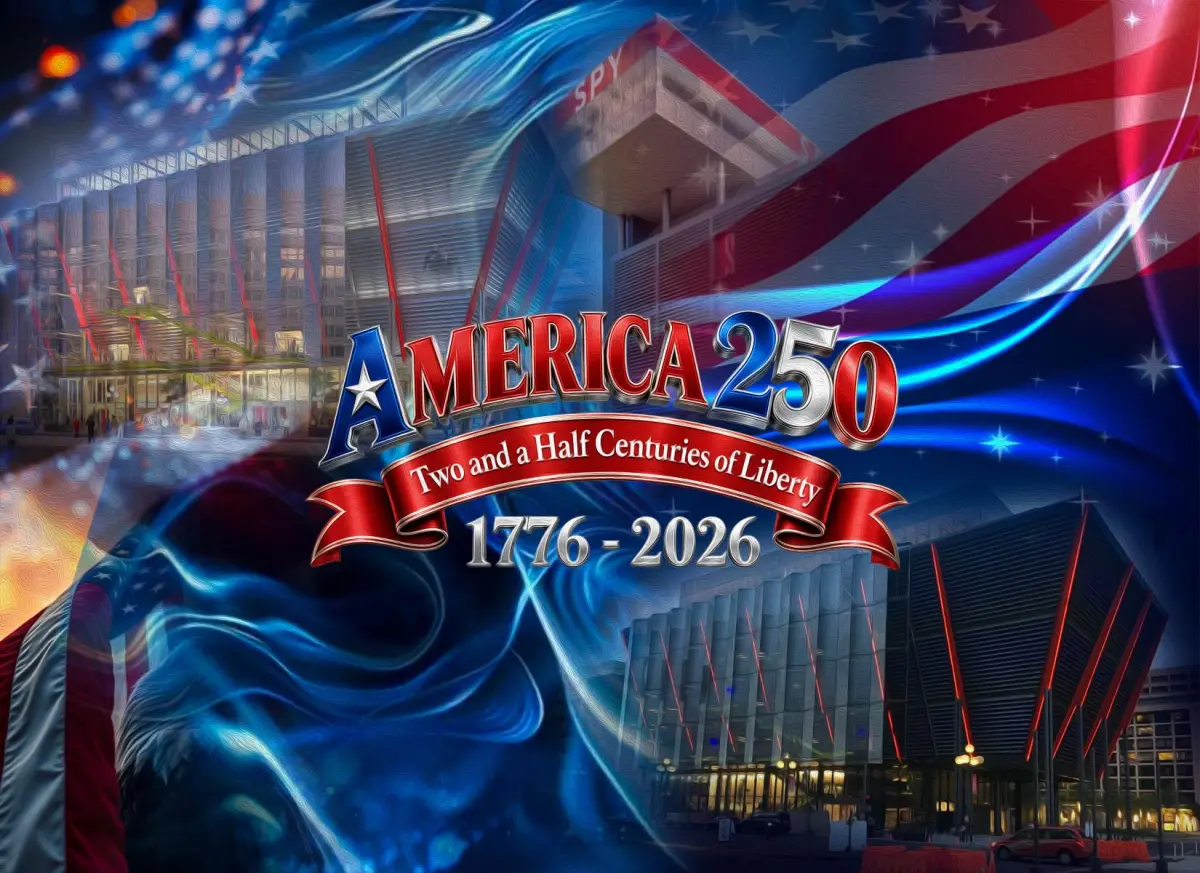
This artwork commemorates America's 250-year journey (1776–2026) through the symbolism of the International Spy Museum , the American flag , flowing ribbons representing global information networks, and the America 250 emblem. The description naturally incorporates the museum's history, its relocation to its modern home in 2019 , the origins of American intelligence with George Washington's Culper Spy Ring , the evolution of intelligence through the Civil War, World Wars, and the establishment of the CIA in 1947 , while highlighting the vital role of intelligence in protecting democracy. Rich patriotic colors, luminous lighting, reflective architecture, layered textures, and dynamic composition create a sophisticated visual narrative celebrating vigilance, innovation, strategic thinking, and public service. More than a tribute to espionage, the artwork honors the generations of intelligence professionals whose unseen dedication has helped preserve American freedom, reminding viewers that some of history's greatest achievements belong to those whose names are rarely known but whose service has shaped the nation's security for 250 years.
Please see Below for Details…


Hotline Order:
Mon - Fri: 07AM - 06PM
019-234-09789
When I created this artwork, I wanted to illuminate a part of American history that is rarely seen, yet has quietly shaped the nation's survival for nearly two and a half centuries. Every great achievement celebrated in America's story—its independence, democracy, scientific progress, diplomacy, and national security—has depended not only on visible leadership and military strength, but also on the unseen work of intelligence professionals. Their victories often remain classified, their names frequently unknown, and their greatest successes are measured by crises prevented rather than battles won. As America commemorates 250 years of independence (1776–2026), I wanted this artwork to honor those who have protected the nation from the shadows.
At the center of the composition stands the America 250 emblem carrying the words "Two and a Half Centuries of Liberty." I deliberately placed it as the visual anchor because every element surrounding it reflects a truth that liberty is protected in many different ways. Some defenders stand on battlefields, others serve in courtrooms or laboratories, while intelligence officers work quietly behind the scenes, gathering information, deciphering secrets, preventing attacks, and helping national leaders make informed decisions before history unfolds.
Dominating the composition is the striking contemporary architecture of the International Spy Museum in Washington, D.C. Opened in 2002 before moving to its purpose-built home at L'Enfant Plaza in 2019, the museum is unlike any other cultural institution in the United States. Rather than celebrating espionage as mystery or entertainment, it presents intelligence as a complex profession that has influenced diplomacy, military strategy, technological innovation, and global security throughout history. Its collections preserve thousands of authentic artifacts, concealed devices, coded communications, surveillance equipment, and stories that reveal how intelligence has shaped world events.
I wanted the museum to stand prominently because it serves as a bridge between secrecy and public understanding. Intelligence work often remains invisible, yet its history deserves thoughtful preservation. The museum reminds us that behind many pivotal moments in American history were analysts, codebreakers, linguists, engineers, field officers, and innovators whose contributions rarely appeared in headlines but profoundly influenced national decisions.
The modern glass façade of the museum became one of my favorite architectural elements within the composition. Glass is transparent, while intelligence is often concealed. That contrast fascinated me. The reflective exterior symbolizes a democratic society's desire for openness, while the mysteries contained within the museum remind us that protecting freedom sometimes requires carefully guarded information. I wanted the building itself to express the delicate balance between transparency and national security—a balance every democracy continually navigates.
Flowing around the museum is the American flag, wrapping the composition in its familiar stars and stripes. The thirteen stripes recall the thirteen colonies that declared independence in 1776, while the fifty stars represent a nation that has grown stronger through innovation, resilience, and vigilance. Rather than remaining static, the flag moves like currents of information flowing across continents, oceans, and generations. I wanted its movement to suggest that freedom is never passive. It requires constant awareness of both opportunities and emerging threats.
The brilliant ribbons of blue, red, and white sweeping across the artwork symbolize invisible networks of communication. Although abstract, they represent encrypted messages, intelligence sharing, satellite communications, cyber defense, diplomatic channels, and the vast exchange of information that defines the modern world. Unlike earlier eras, today's security often depends as much upon data and analysis as it does upon physical borders. These flowing forms connect the museum to the broader evolution of intelligence in the twenty-first century.
The America 250 emblem itself glows with metallic brilliance, reflecting both history and progress. I wanted its polished surface to resemble a commemorative medal awarded not to one individual, but to every generation that has contributed to preserving the nation's liberty. The accompanying dates, 1776–2026, remind viewers that intelligence has existed since America's earliest days. During the American Revolution, General George Washington understood the value of espionage and established networks such as the Culper Spy Ring, whose intelligence gathering helped the Continental Army anticipate British movements and protect the fragile struggle for independence. Long before sophisticated satellites or digital surveillance existed, information itself had already become one of the nation's most valuable strategic resources.
As the United States matured, intelligence evolved alongside it. During the Civil War, both the Union and Confederacy developed increasingly organized intelligence operations. In the twentieth century, two World Wars accelerated advances in cryptography, signals intelligence, aerial reconnaissance, and codebreaking. The successful decryption of enemy communications shortened conflicts, saved countless lives, and reshaped military strategy. Following the establishment of the Central Intelligence Agency (CIA) in 1947 and the expansion of America's modern intelligence community, intelligence became an essential component of diplomacy, counterterrorism, cybersecurity, scientific innovation, and global stability. I wanted these historical milestones to quietly echo throughout the composition without overwhelming its visual simplicity.
Color became the emotional language of this artwork. Deep crimson represents courage—not only the courage displayed on battlefields, but also the quiet bravery of those who work anonymously in service to their country. Rich blue symbolizes wisdom, strategic thinking, integrity, and the constant search for truth through evidence rather than assumption. Brilliant white reflects responsibility, ethical judgment, and the democratic values intelligence ultimately exists to defend. Soft silver tones across the museum suggest advanced technology and innovation, while luminous indigo introduces an atmosphere of mystery without sacrificing clarity or hope.
Lighting plays a particularly symbolic role throughout the composition. Rather than dramatic spotlights, I chose gentle, layered illumination moving across the building and flag. Intelligence often functions by bringing hidden information into the light, allowing leaders to make wiser decisions before crises unfold. The glowing highlights on the museum suggest moments of discovery, while the deeper shadows surrounding portions of the architecture acknowledge that some aspects of intelligence will always remain unseen. I wanted the balance between light and shadow to express the relationship between knowledge and uncertainty.
Texture reinforces the artwork's narrative. The smooth glass and steel of the museum reflect innovation and modernity, contrasting beautifully with the soft movement of the American flag. The flowing digital ribbons appear almost fluid, suggesting the continuous movement of information across secure networks. Tiny points of light scattered throughout the composition resemble stars, satellites, or encrypted signals traveling silently across the globe. Together these textures create a visual language of precision, technology, and constant vigilance.
Compositionally, every line guides the viewer toward the museum before expanding outward through the flowing ribbons and patriotic colors. The horizontal architecture provides stability, while the sweeping curves introduce motion and connectivity. This balance reflects the very nature of intelligence work: disciplined analysis supported by rapid adaptation to an ever-changing world. The composition avoids visual clutter because effective intelligence depends upon clarity emerging from complexity.
Artistically, I blended symbolic realism with contemporary digital collage to express both the physical institution and the invisible world it represents. Rather than illustrating covert operations or dramatic espionage scenes, I focused on atmosphere, architecture, movement, and symbolism. Painterly textures, luminous gradients, reflective surfaces, and cinematic lighting transform the museum into a modern monument dedicated to knowledge, vigilance, and service.
The atmosphere is thoughtful, modern, and quietly powerful. I did not want viewers to associate intelligence solely with secrecy or suspense. Instead, I wanted them to appreciate its deeper purpose: protecting democratic institutions, preserving peace whenever possible, preventing conflict through understanding, and providing leaders with the knowledge necessary to make informed decisions. The true success of intelligence often lies in the crises that never occur because dangers were recognized before they could unfold.
Every symbol carries historical significance. The International Spy Museum preserves the history of intelligence and espionage across civilizations while educating the public about its continuing relevance. The American flag represents the constitutional freedoms intelligence professionals are sworn to protect. The flowing ribbons symbolize communication, innovation, cyber defense, and the invisible exchange of information shaping the modern world. The museum's contemporary architecture reflects transparency balanced with responsibility, while the America 250 emblem connects America's revolutionary origins with the sophisticated intelligence capabilities that help safeguard the nation today. Together these elements tell a story not of secrecy for its own sake, but of knowledge placed in service of liberty.
As the artist, I wanted this composition to honor individuals whose greatest accomplishments often remain unknown. Their stories may never fill textbooks, and many will never receive public recognition, yet their dedication has protected lives, strengthened alliances, prevented conflicts, and preserved the democratic institutions upon which the United States was founded. This artwork is my acknowledgment that history is shaped not only by those who stand in the spotlight, but also by those whose quiet vigilance allows that light to continue shining.
Ultimately, "Guardians in the Shadows: The International Spy Museum and the Hidden Intelligence That Safeguarded America (1776–2026)" is my tribute to every analyst, codebreaker, cryptographer, field officer, linguist, scientist, cyber specialist, and intelligence professional whose commitment has quietly strengthened the nation across generations. It celebrates 250 years of American liberty by recognizing that freedom is protected not only through visible courage, but also through knowledge, foresight, integrity, and the unseen dedication of those who serve without expecting recognition.
Add your review
Your email address will not be published. Required fields are marked *
Please login to write review!
Looks like there are no reviews yet.