
Faces of a Nation: Mount Rushmore and the Enduring Legacy of American Leadership (1776–2026)
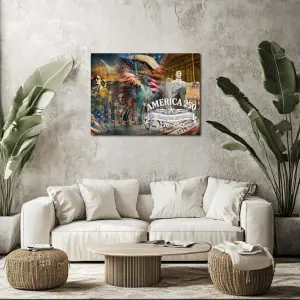
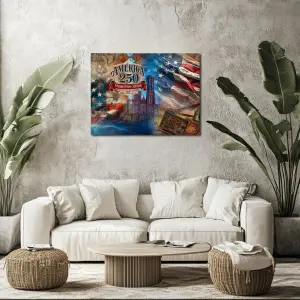
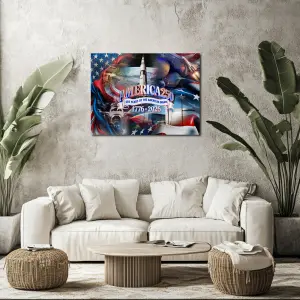
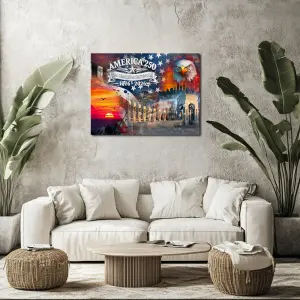
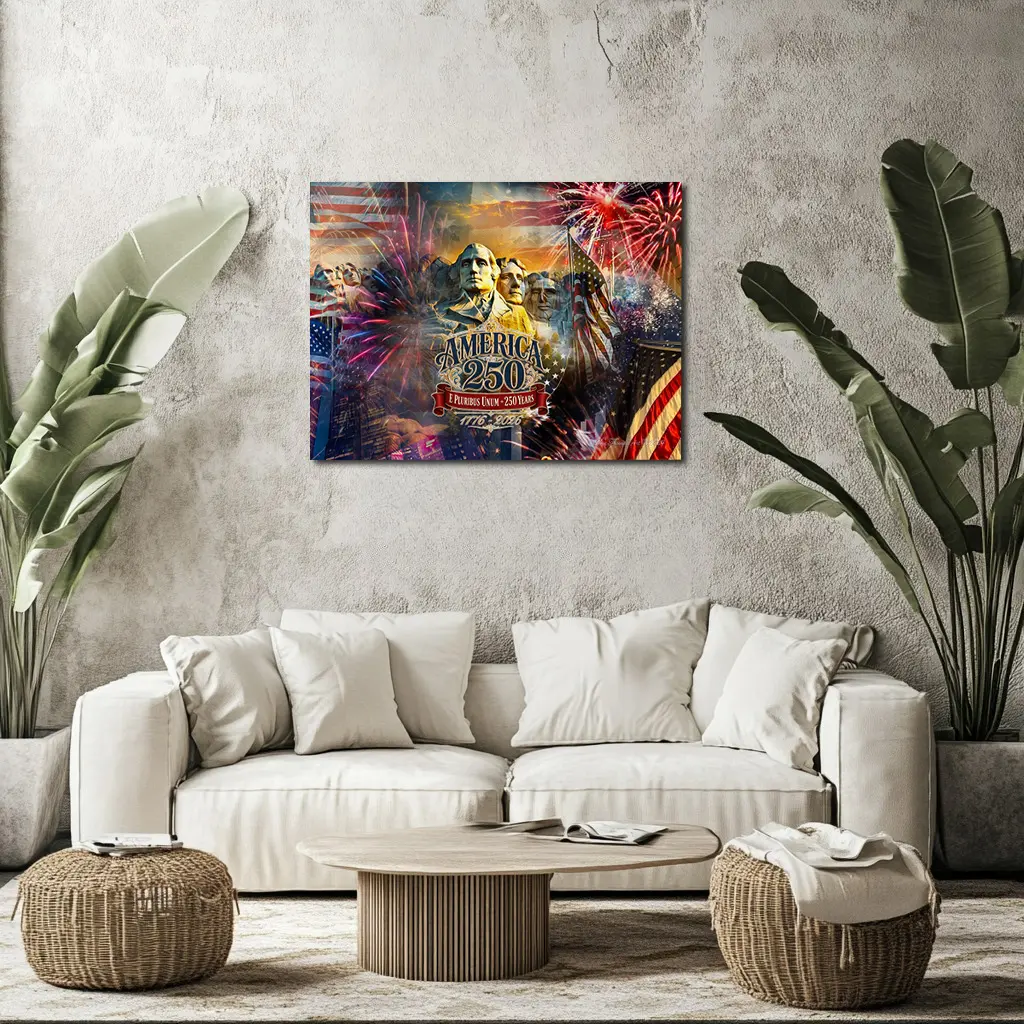
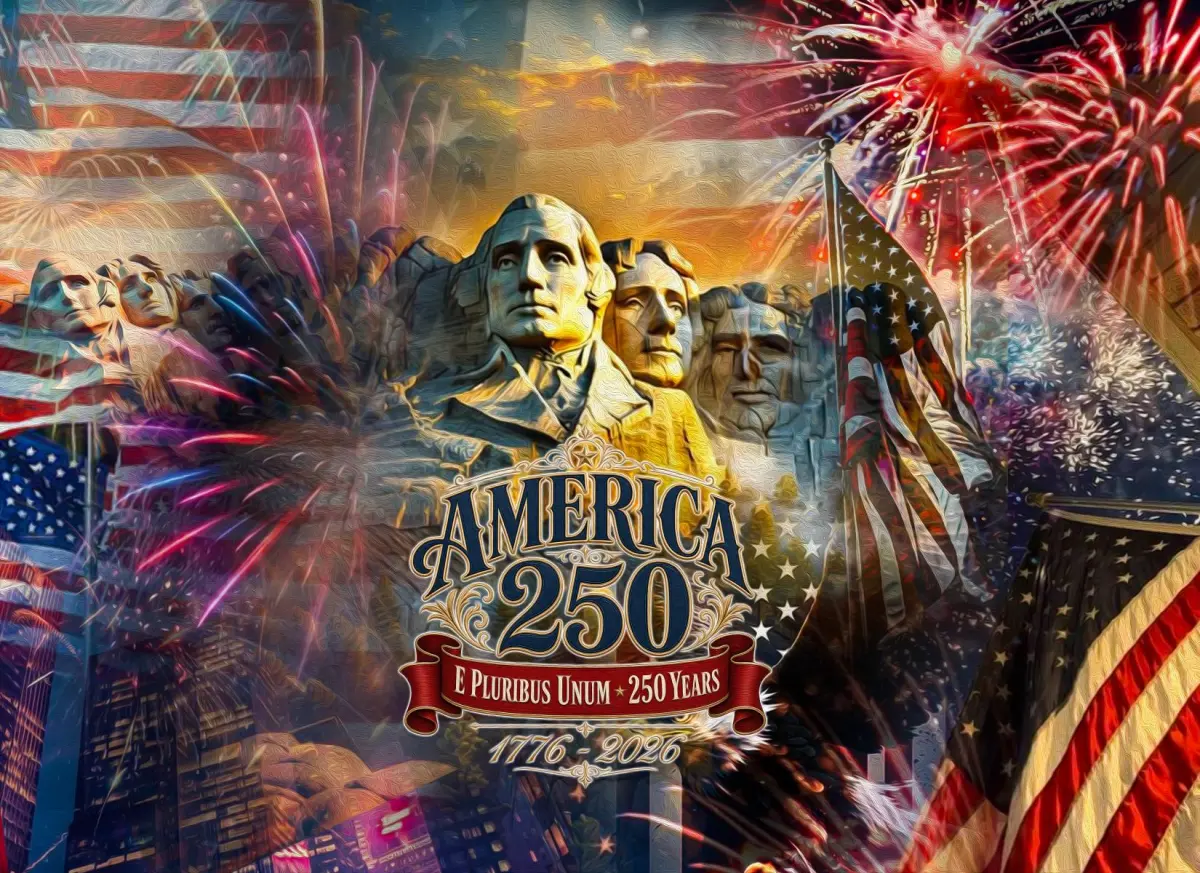
This artwork honors America's 250-year journey (1776–2026) through the timeless symbolism of Mount Rushmore , where George Washington , Thomas Jefferson , Theodore Roosevelt , and Abraham Lincoln represent the birth, expansion, preservation, and modernization of the United States. The description naturally incorporates the history of the monument, its sculptor Gutzon Borglum , and the historical contributions of each president while also acknowledging the cultural significance of the Black Hills . Flowing American flags, brilliant fireworks, and the America 250 emblem reinforce themes of unity, democratic leadership, resilience, and national progress. Rich patriotic colors, dramatic lighting, layered textures, and balanced composition transform the memorial into a powerful visual narrative that celebrates not only four presidents, but the enduring ideals they represent. More than a tribute to history, the artwork affirms that America's greatest legacy is found in the shared values and aspirations that continue to unite its people across generations.
Please see Below for Details…


Hotline Order:
Mon - Fri: 07AM - 06PM
019-234-09789
When I created this artwork, I wanted to celebrate not simply four remarkable presidents, but the enduring ideals they came to represent. Mount Rushmore has always been more than a monumental sculpture carved into stone. To me, it is a visual timeline of America's first 150 years—a place where leadership, vision, courage, and perseverance are permanently etched into the landscape. As the United States celebrates 250 years of independence (1776–2026), I wanted this composition to remind viewers that the nation's greatest legacy is not found in granite alone, but in the principles that continue to inspire each new generation.
At the center of the artwork stands the America 250 emblem, accompanied by the historic national motto "E Pluribus Unum – Out of Many, One." I chose this motto because it perfectly expresses the story I hoped to tell. America has always been shaped by people of different backgrounds, beliefs, and experiences who came together in pursuit of a shared future. Every monument, every flag, and every burst of light surrounding the emblem reflects that continuing journey toward unity.
The heart of the composition is the majestic Mount Rushmore National Memorial, rising proudly above the surrounding landscape. Located in the Black Hills of South Dakota, Mount Rushmore was sculpted by Gutzon Borglum, with work beginning in 1927 and concluding in 1941. Rather than honoring every president, Borglum selected four leaders whose contributions defined the nation's early history. Together, they symbolize the birth, growth, preservation, and development of the United States.
The first face carved into the mountain is George Washington, the nation's first President and the Commander-in-Chief of the Continental Army during the American Revolution. Washington represents the birth of the republic. His leadership secured independence, while his decision to step away from power after two presidential terms established one of the world's strongest democratic traditions. I wanted his calm expression to remind viewers that true leadership begins with humility, integrity, and service to something greater than oneself.
Beside Washington stands Thomas Jefferson, principal author of the Declaration of Independence and the nation's third President. Jefferson gave voice to one of history's most influential statements—that all people are created equal and possess unalienable rights. During his presidency, the Louisiana Purchase of 1803 doubled the size of the United States, opening vast new opportunities for exploration, settlement, and national growth. His presence symbolizes vision, intellectual curiosity, and the enduring pursuit of liberty.
The third figure is Theodore Roosevelt, whose energetic leadership transformed America during the early twentieth century. Roosevelt championed conservation, protected millions of acres of public land, strengthened the nation's role on the global stage, and believed that economic progress should be balanced with public responsibility. I included him because America's greatness has always depended not only on expansion, but also on stewardship—of its natural landscapes, its institutions, and its opportunities for future generations.
The final face belongs to Abraham Lincoln, whose leadership during the Civil War preserved the Union at its most fragile moment. Through the Emancipation Proclamation and his unwavering commitment to constitutional government, Lincoln helped redefine the nation's understanding of freedom and equality. His inclusion on Mount Rushmore reminds us that preserving a nation often requires as much courage as creating one. I wanted Lincoln's thoughtful expression to represent compassion guided by conviction—a leadership rooted in moral purpose rather than political convenience.
Together, these four presidents tell the story of America's first century and a half. Washington gave the nation its beginning. Jefferson expanded its promise. Lincoln preserved its unity. Roosevelt prepared it for a modern future. Their faces are not presented as symbols of perfection but as reminders that every generation is called to confront its own challenges with courage, wisdom, and a willingness to serve the common good.
Surrounding Mount Rushmore, I placed multiple American flags, allowing their flowing fabric to frame the monument with movement and life. The thirteen stripes recall the original colonies that declared independence in 1776, while the fifty stars represent a Union that has continued to grow through generations of change. I wanted the flags to feel alive, suggesting that patriotism is not confined to history but remains an active commitment renewed by every generation.
Brilliant fireworks illuminate the evening sky above the monument. Their vibrant colors celebrate not only America's Semiquincentennial but also the enduring joy of independence itself. Since the nation's earliest Independence Day celebrations in 1777, fireworks have symbolized both remembrance and hope. Their light momentarily transforms the night, just as moments of courage throughout history have illuminated the nation's path during periods of uncertainty.
The rugged granite landscape beneath the monument serves as an important symbol in its own right. The Black Hills have long held profound cultural and spiritual significance for the Lakota Sioux and other Indigenous peoples. As the artist, I wanted the mountain to remind viewers that America's history is layered and complex. The nation's story includes remarkable achievements alongside difficult conversations about land, memory, justice, and reconciliation. Recognizing that complexity does not diminish the nation's accomplishments—it deepens our understanding of them and encourages a more honest appreciation of the journey toward a more inclusive future.
Color became one of the strongest emotional voices within this composition. Rich crimson speaks of sacrifice, courage, and the countless individuals who helped shape the nation across 250 years. Deep blue conveys stability, democratic institutions, and enduring national purpose. Brilliant white symbolizes hope, integrity, and the continual pursuit of equality. Warm golden light gently illuminates the presidential faces, emphasizing the wisdom each leader contributed to the nation's development, while soft amber and violet tones in the sky represent the passage of time from America's revolutionary dawn to its Semiquincentennial celebration.
Lighting moves intentionally across the artwork. The warm glow surrounding Mount Rushmore makes the monument appear almost timeless, emerging from history rather than existing within a single moment. The fireworks create bursts of radiant energy that symbolize innovation, celebration, and the optimism of future generations. Gentle highlights ripple across the American flags, creating movement that draws the viewer's eye throughout the composition, while subtle shadows carved into the granite faces reveal the complexity and depth of history itself.
Texture gives the artwork its physical presence. The weathered granite of Mount Rushmore contrasts beautifully with the soft folds of the flags and the sparkling brilliance of the fireworks. Every carved feature on the presidential faces reflects permanence and endurance, while the flowing fabrics and luminous sky introduce energy and renewal. Together, these contrasting textures remind us that lasting ideals must remain strong enough to endure yet flexible enough to inspire changing generations.
Compositionally, I wanted the viewer's eye to rise naturally toward the four presidential faces before returning to the central America 250 emblem. The monument provides stability through its monumental scale, while the surrounding flags and fireworks create movement and celebration. The balanced arrangement allows every element to support the others, reinforcing the central message that America's history is strongest when its people remain connected by shared values rather than divided by individual differences.
Artistically, this work combines symbolic realism with contemporary digital collage. Instead of depicting a single historical event, I brought together national symbols, commemorative design, patriotic imagery, and monumental architecture into one unified visual narrative. Layered textures, cinematic lighting, painterly color grading, and realistic detail allow the artwork to feel both timeless and contemporary, reflecting the ongoing dialogue between America's past and its future.
The atmosphere is proud, reflective, and deeply hopeful. I did not want to create a monument to personalities alone. I wanted to create a tribute to leadership itself—the kind of leadership that inspires, unites, and leaves behind institutions stronger than those it inherited. Every presidential face becomes a chapter in a much larger national story still being written.
Every symbol carries historical and philosophical meaning. Mount Rushmore represents the evolution of the American republic through visionary leadership. George Washington symbolizes independence and constitutional restraint. Thomas Jefferson embodies liberty, democratic ideals, and national expansion. Abraham Lincoln reflects unity, equality, and the preservation of the Union. Theodore Roosevelt represents progress, conservation, and modern national leadership. The American flags celebrate unity across generations, while the fireworks honor the enduring spirit of independence. The America 250 emblem reminds us that these achievements belong not only to history but also to every citizen entrusted with carrying them forward.
As the artist, I wanted this composition to express that America's greatest monument is not carved into granite—it is the enduring character of its people. Leaders may inspire a nation, but it is the collective commitment of its citizens that transforms ideals into lasting institutions. The story of America did not end with the Founding Fathers or the presidents of Mount Rushmore. Their legacy lives on whenever courage is matched with compassion, liberty is balanced by responsibility, and unity is chosen over division.
Ultimately, "Faces of a Nation: Mount Rushmore and the Enduring Legacy of American Leadership (1776–2026)" is my tribute to the leaders who helped define America's first 250 years and to the generations who continue to shape its future. It celebrates a nation built through vision, preserved through sacrifice, strengthened through democratic leadership, and sustained by the enduring belief that out of many, one people can continue to build a more perfect union.
Add your review
Your email address will not be published. Required fields are marked *
Please login to write review!
Looks like there are no reviews yet.